


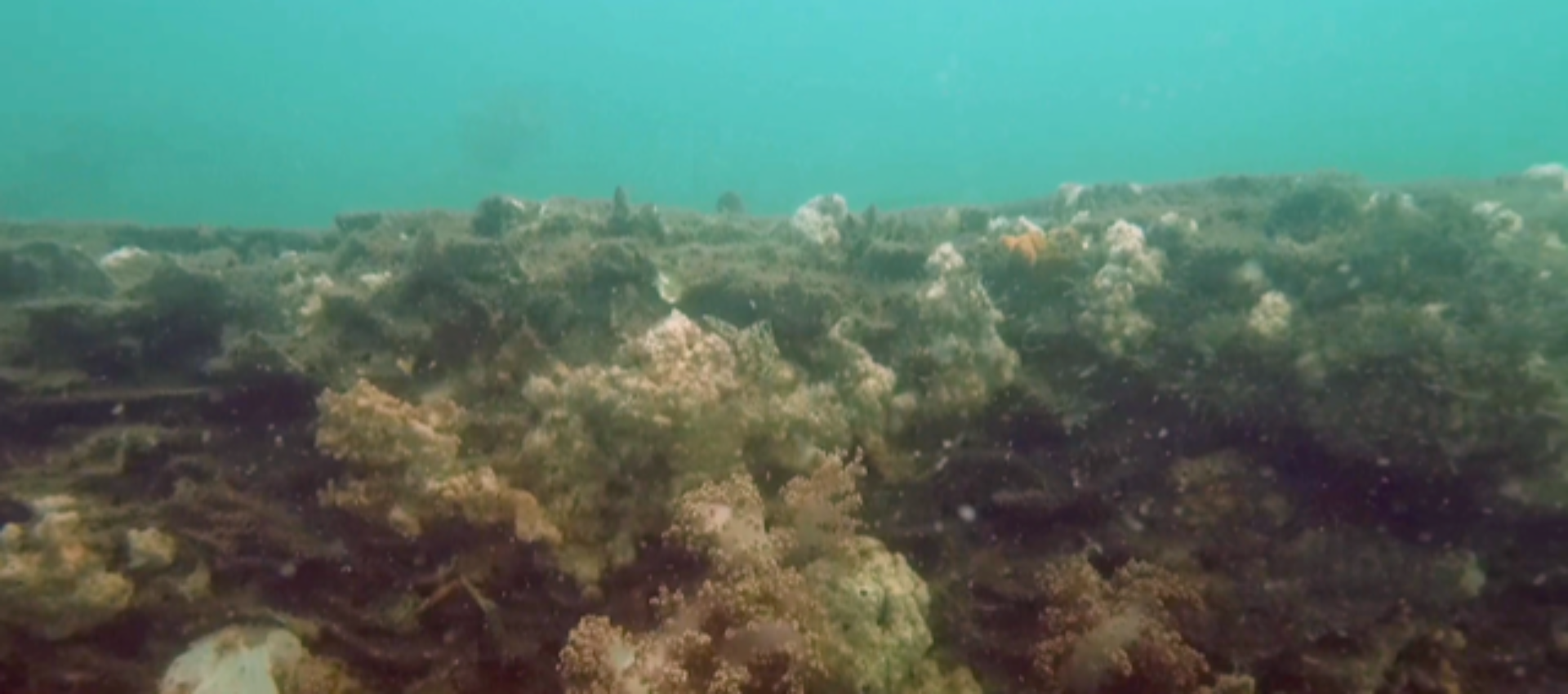

The reef in this Australian estuary has fish assemblages 3.8 times more speciose with 10 times more fish abundance than before restoration. The findings support the concept that shellfish reef restoration enhances fish abundance and diversity at restoration sites.
About this project
To enhance fish stocks in Moreton Bay, twenty reef units of six different types have been installed, including biodegradable structures. 30 months of video monitoring and robust data showed the value of the restoration work for fish.

Ecosystem
- Estuary
- shellfish reef
Product
- BESE-elements
Partners
- Healty Land and Water
- University of the Sunshine Coast
Results
- biodiversity increase
- fish species increase
- harvestable fish increase
- total fish abundance increase
- coral and shellfish settlement

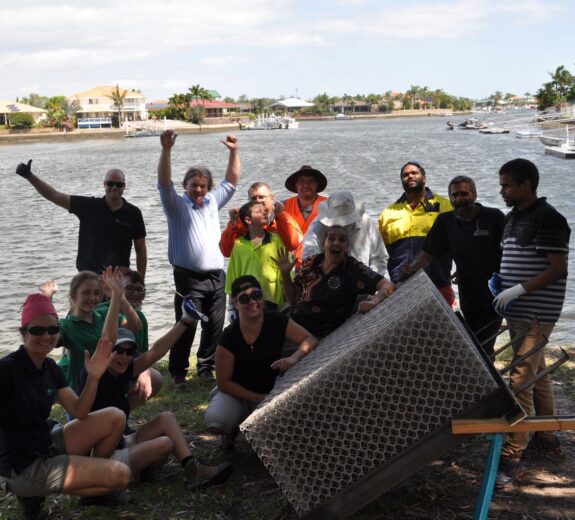
Enhancing fish stocks with subtidal reef structures
Shellfish restoration in Pumicestone Passage, near Bribie with the main objective to enhance fish stocks which had been put under stress by a range of pressures including poor water quality, loss of fish habitat and increasing fishing pressures. Twenty reef units of six different types have been installed as part of the project, including shell patch reefs, crates of shells, and a biodegradable structures.
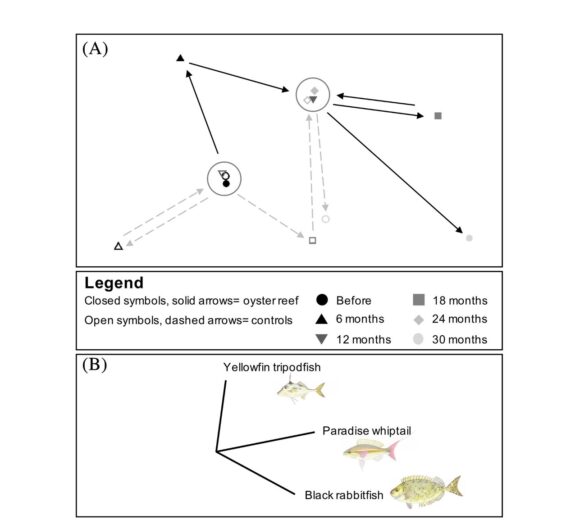
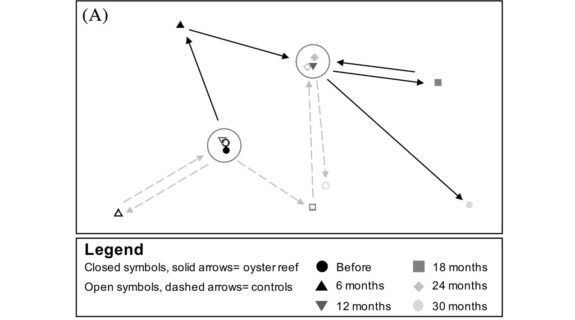
Attraction versus production in restoration
With the use of baited and unbaited cameras biodiversity and abundance of fish were quantified. Restoration significantly enhanced the diversity and abundance of fish assemblages and the density of harvestable fish at the restoration site. These findings further support the notion that restored shellfish reefs significantly enhance fish abundance and diversity and that restored reefs can enhance the overall carrying capacity of seascapes for fish, rather than simply centralizing them at restoration sites.
‘Attraction versus production in restoration: spatial and habitat effects of shellfish reefs for fish in coastal seascape’ by Gilby et al. is available in Restoration Ecology
A bit of history
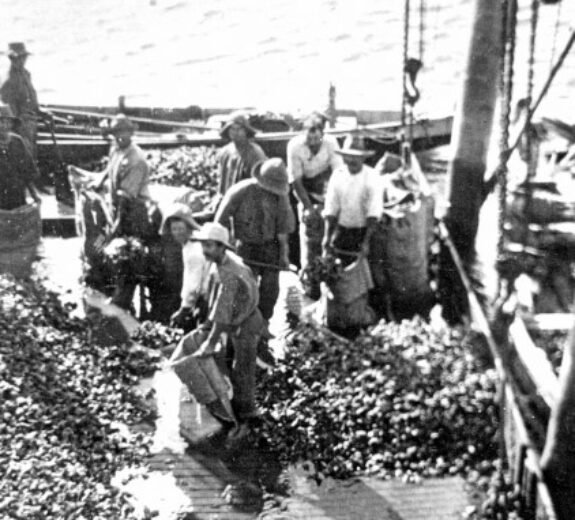
The purpose of the Pumicestone Passage Shellfish Reef Restoration project is to restore shellfish reef populations for the benefit of the Moreton Bay ecosystem and the community. Up until the turn of the last century, Moreton Bay supported magnificent intertidal and subtidal shellfish beds which had always been a valuable food and cultural resource for Traditional Owners. The oyster industry harvested oysters for a variety of purposes – not just eating. Queensland’s early roads and houses were made out of shells, with live and dead oysters thrown into lime burners for cement. Up to the point where oyster reefs are now functionally extinct in Pumicestone Passage (Source: hlw.org.au)
Community efforts and benefits
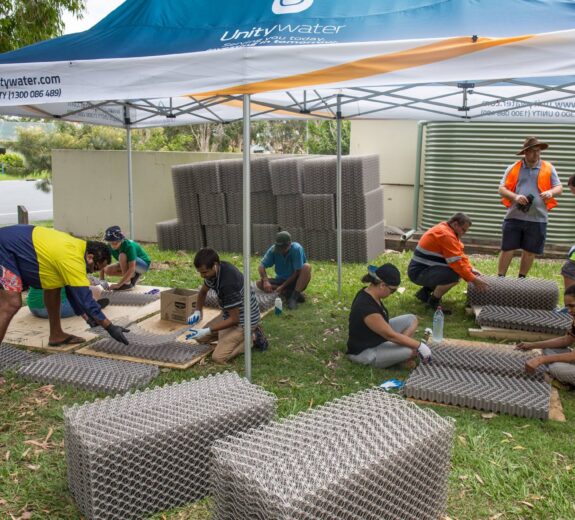
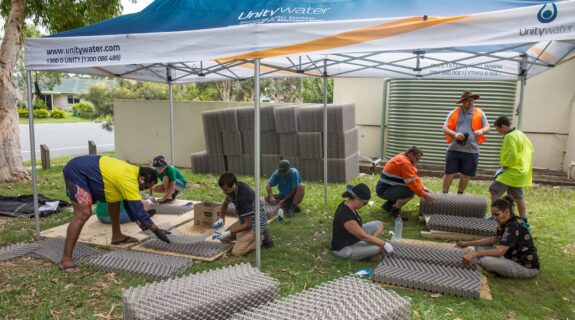
Traditional Owners have played a major role in the push to restore shellfish habitats. The improved ecosystem services not only benefit the environment, but a healthier environment tends to attract more tourism, including recreational fishing activity. Restoration represents a significant opportunity to renew the cultural links of traditional owners to their land and waterways and tourism. Traditional owners, recreational fishermen, Moreton Bay Council, Bribie Island Scout group, scientist of the University of the Sunshine Coast were part of the project and volunteer group.
Results
• 1.5 ha shellfish reef restoration
• Increased fish production
• 3.8 times more fish species
• 10 times more fish abundance
• Settlement of shellfish, soft and hard corals
• Scientific paper ‘Attraction versus production in restoration: spatial and habitat effects of shellfish reefs for fish in coastal seascape’ by Gilby et al: https://doi.org/10.1111/rec.13413