


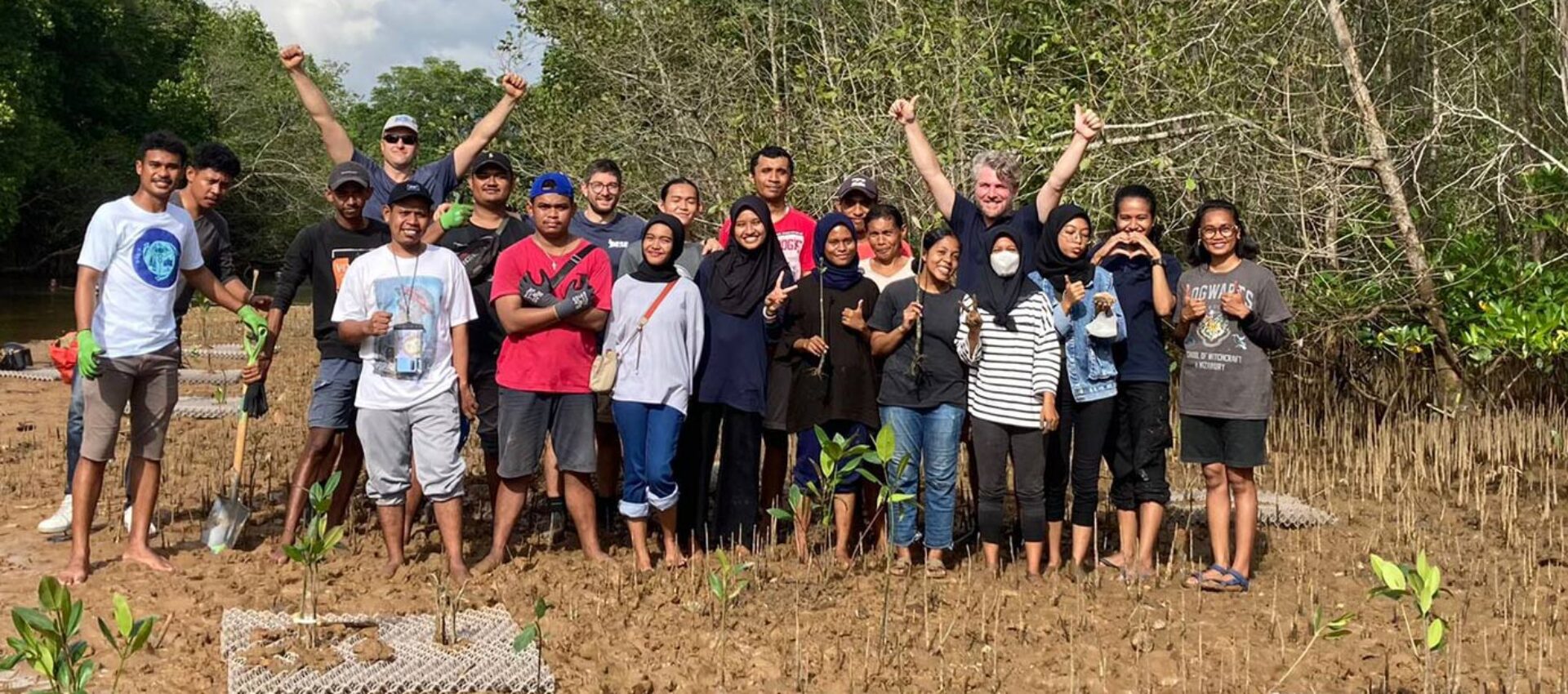

We empowered students from Pattimura University in mangrove and coral reef restoration initiatives.
Mangrove restoration efforts are underway at three distinct locations.
Three locations were identified for mangrove restoration, a high risk location, a medium risk and a low risk location.
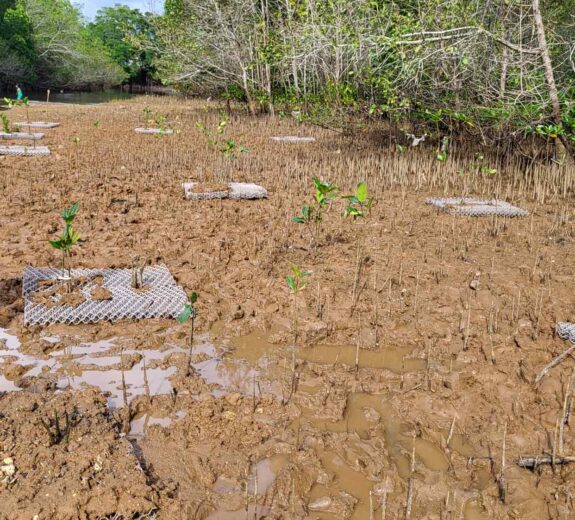
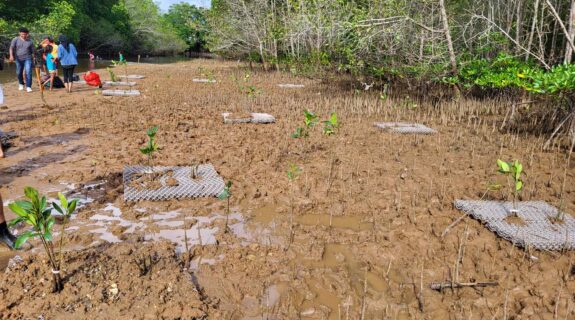
At all of these locations 1m2 BESE-elements with mangrove propagules and seedlings were planted.

Ecosystems
- Mangroves
Products
- BESE-elements
- BESE-mesh
Results
- 300m2 of kickstarted mangrove forest
Partners
- Pattimura University
- Waardenburg Ecology

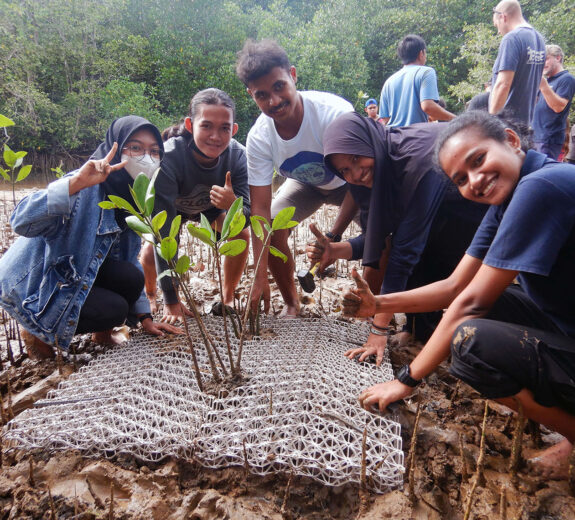
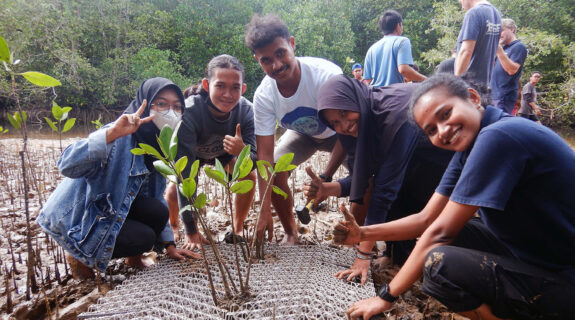
Empowering students
Twenty students from Pattimura University participated in hands-on training on installing BESE-elements with mangrove propagules and seedlings. They were also trained in monitoring the growth of the mangroves and are actively involved in tracking the progress of the restoration efforts.
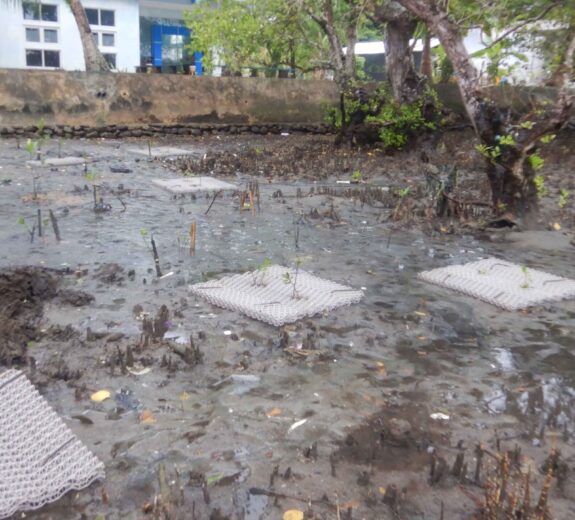
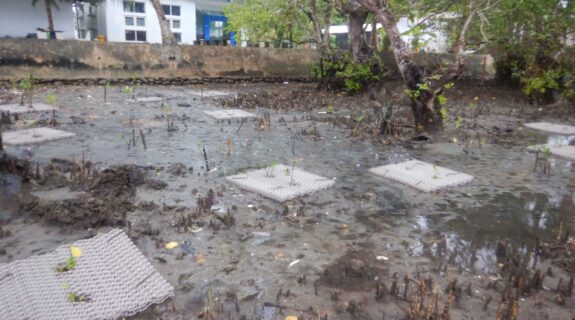
Surviving storms
One of the mangrove restoration sites is located in front of the fisheries offices in Waai. During a severe storm, waves surged so high that they struck the offices behind the protective wall. Despite the intensity of the storm, only 40% of the BESE-elements plots with mangroves were lost. This incident underscores the strength and resilience of the BESE-elements, showcasing their effectiveness in protecting the organisms within and mitigating the impacts of natural disasters.
Propagules work better than seedlings
Our BESE-elements employ three methods for seed and propagule application: bundling propagules, bundling seedlings, and single propagules. Rhizophora propagules insertion proves most effective, followed by bundling seedlings with lower survival rates. Bundling propagules yielded minimal results. Conveniently, direct insertion of propagules into BESE-elements emerges as the most successful method.
A boxer who became a conservation hero
Our collaboration extends to a local mangrove conservation initiative, which has an inspiring backstory. A renowned local boxer, Dominggus Ledrick Sinanu, used to fish near the mangroves but witnessed a decline in fish catches coinciding with the loss of mangrove habitat. He transformed his life and became a dedicated conservationist of the forest. His commitment to conservation has left a lasting legacy, inspiring his children and grandchildren to continue his conservation efforts.
Mangroves, seagrass, and coral reefs form interconnected ecosystems crucial for coastal resilience. Mangroves provide protection, seagrass beds stabilize sediment, and coral reefs offer habitats. They rely on each other for nutrients, shelter, and biodiversity. This symbiotic relationship enhances ecosystem health, supports fish populations, and buffers coastal communities against climate impacts, emphasizing their integral connectivity for overall marine ecosystem function.
Results
- Most propagules started to form roots in the BESE-elements
- Social aspects, such as pollution and physical damage negatively influenced the outcomes.
- The mangroves in the BESE-elements survived a heavy storm.