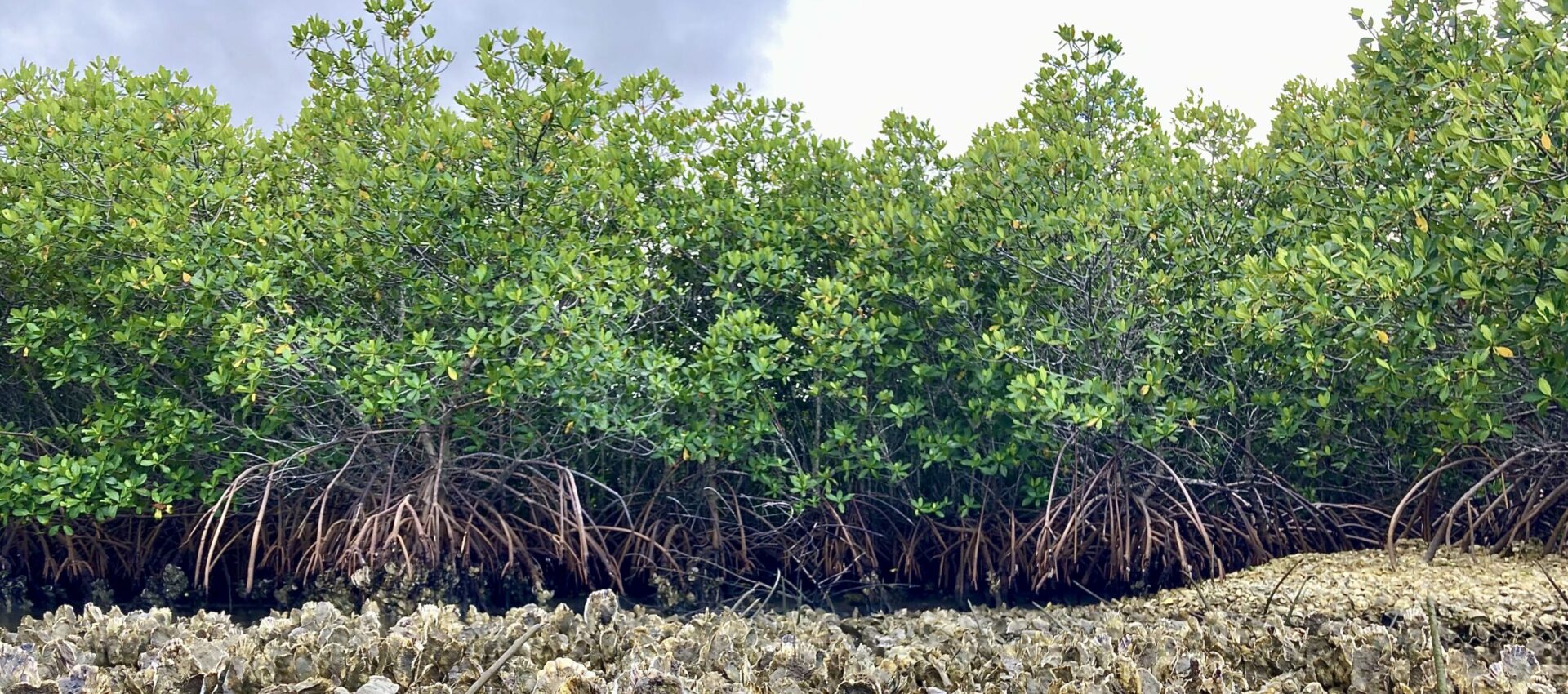

2 hectares of oyster reef restored with recycled oyster shells attached to BESE-elements
About this project

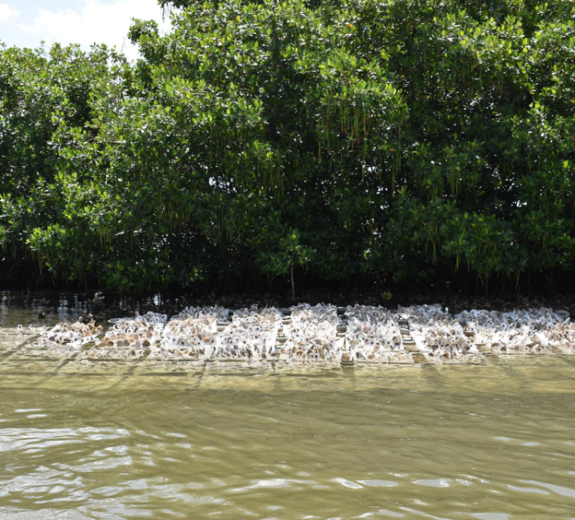
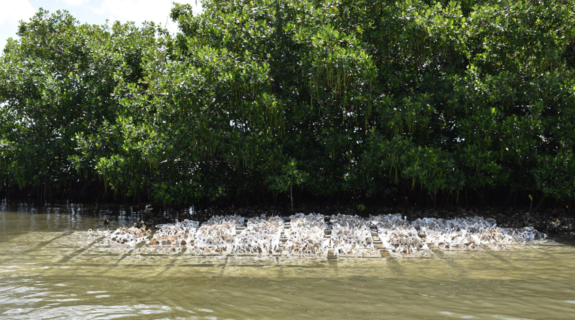
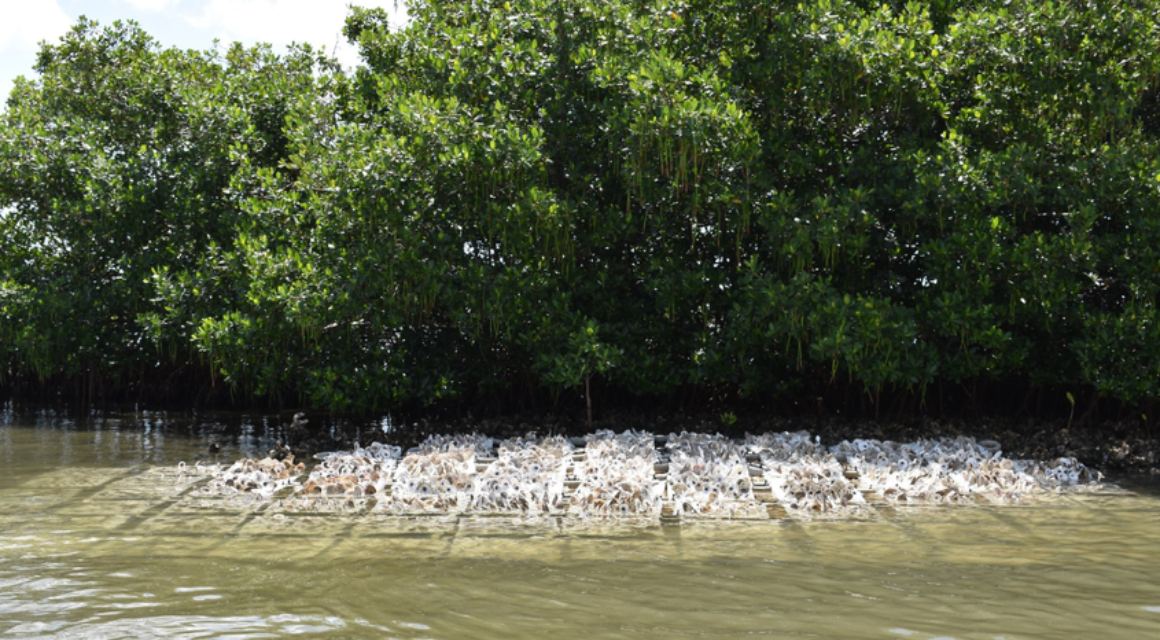
The Marine Discovery Centre in New Smyrna Beach, Florida began collecting empty oyster shells from local restaurants for oyster reef restoration efforts. Together with dr. Linda Walters from the University of Central Florida they designed oyster mats, which are very effective for oyster reef restoration in the Indian river lagoon. The oyster-mats are two BESE-elements clicked on top of each other with shell material attached to it.

Ecosystem
- Oyster reef
Products
- Recycled oyster shells
- BESE-elements
Results
- Restored oyster reef
- Water quality improvement
- Protected shoreline
Partners
- University of Central Florida
- Florida Fish and Wildlife Conservation Commission
- Marine Discovery Centre

The Oyster Mat
The oyster-mats are two BESE-elements clicked on top of each other with shells attached to it. They are a non-plastic alternative for oyster reef restoration and designed by Dr. Walters from UCF (University of Central Florida).
Together with students the oyster mats are placed in the Indian River Lagoon, on locations optimal for intertidal oyster reef restoration
Volunteers and Education
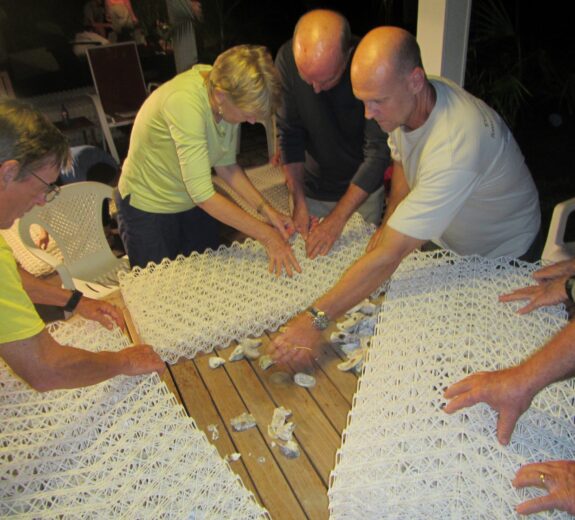
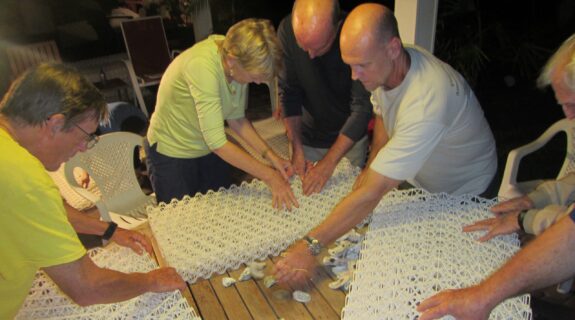
Education and community involvement are central to this project. Through educational programs and community outreach, a large number of volunteers are eager to participate in restoration efforts. With the help of volunteers BESE-elements are assembled and oyster shells are attached. Once the oyster mats are completed, students from UCF deploy them in the field for restoration purposes.
Oyster larvae prefer to settle on oyster shells
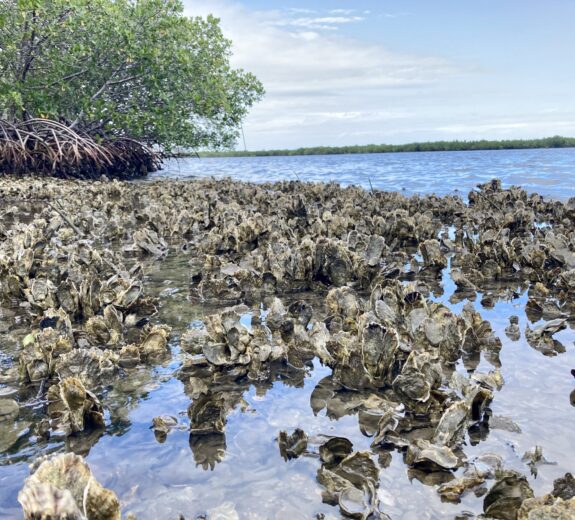
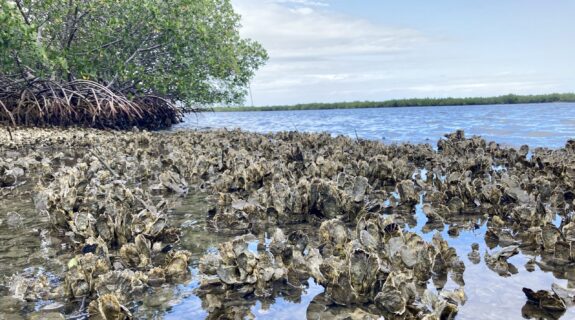
Oyster larvae are naturally attracted to settle on oyster shells, but empty shells can shift or become buried on the seabed, leading to larval mortality. To address this issue, BESE-elements are utilized to anchor the oyster shells in place, ensuring optimal conditions for larval settlement and oyster reef restoration.
Oyster reefs and their ecosystem functions
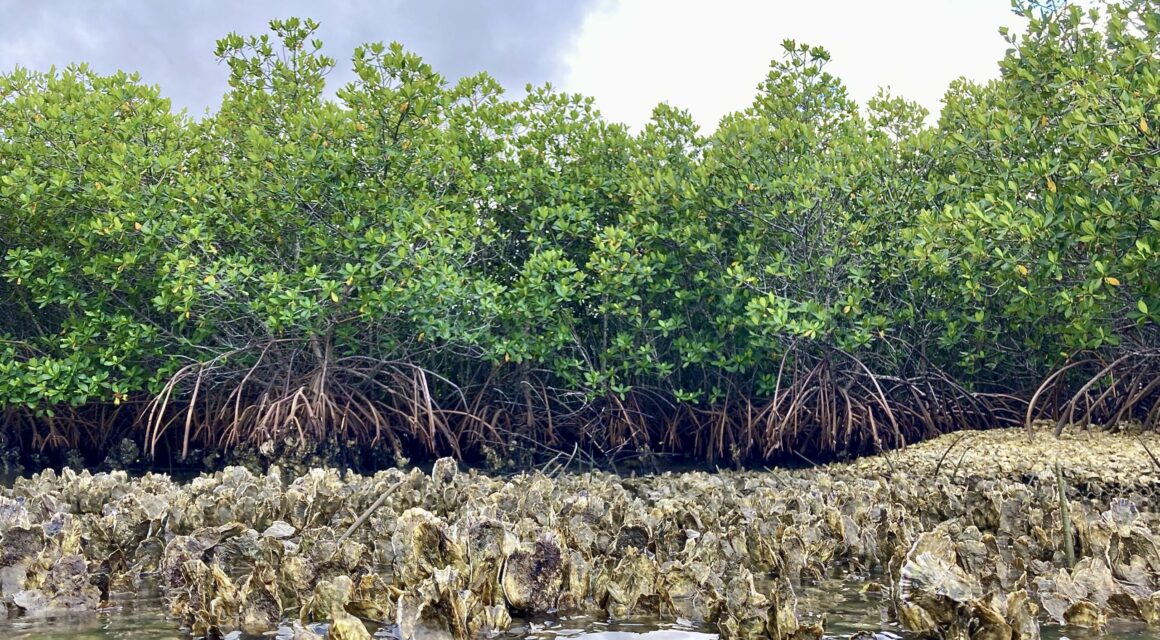
Oyster reefs are essential ecosystems with numerous interconnected benefits. These reefs act as natural buffers, safeguarding coastlines from erosion and storm damage, while also providing critical habitats for diverse marine life. Moreover, oysters’ role as filter feeders enhances water quality by removing pollutants and excess nutrients.
These ecosystem functions highlight the significance of oyster reefs, not only for coastal resilience but also contributing to the overall biodiversity and sustainability of coastal regions.
Results
- 5 hectare of oyster reefs restored in the Indian River Lagoon, Florida
- Coastal protection
- Biodiversity hotspot
- Water quality improvement
- No polluting materials used