


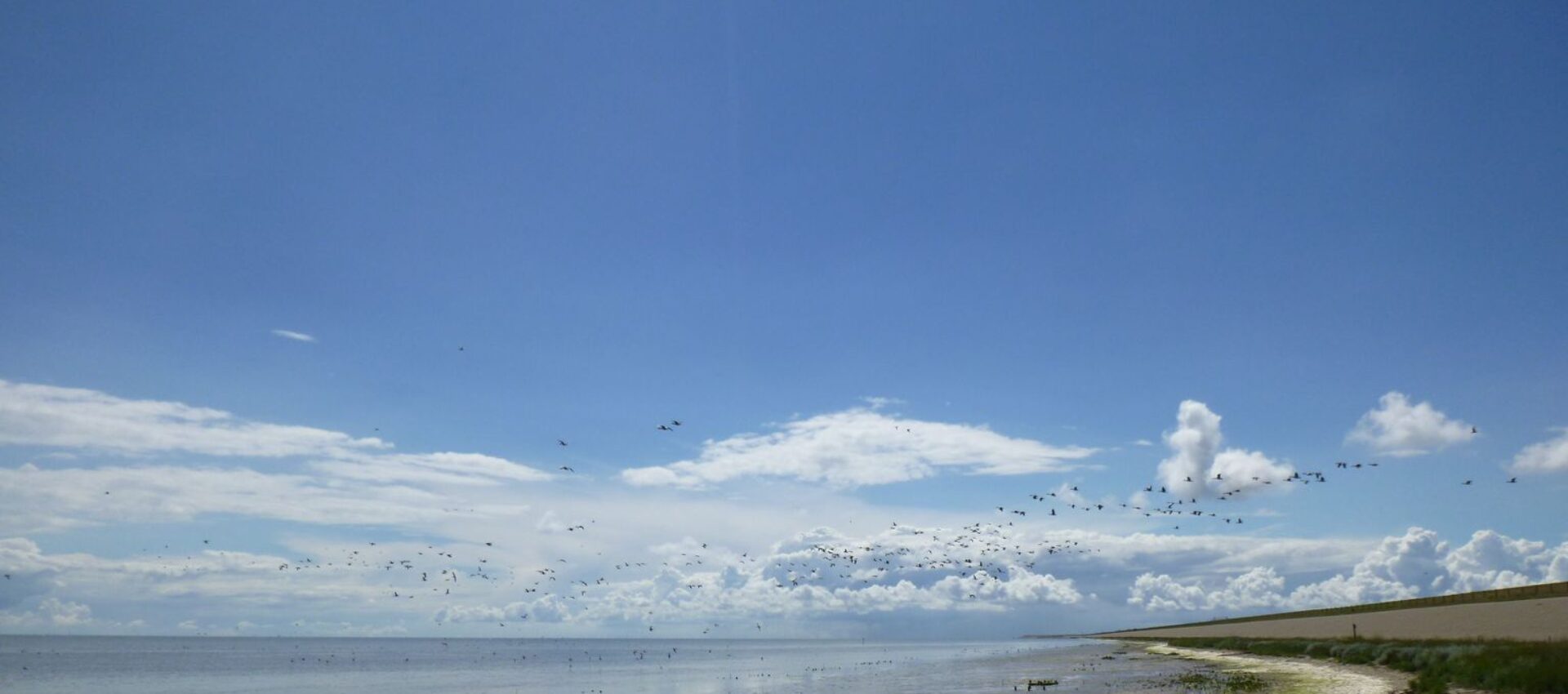

Improving saltmarsh restoration success by imitating nature. 100% survival rate for cordgrass transplants in BESE-elements. With many plant species following by natural recruitment
About this project

Can we improve saltmarsh restoration by temporarily imitating nature? BESE-elements, our potato mats, provide shelter for young plants. They stabilize the sediment providing conditions for settlement and growth of saltmarsh vegetation. To test the efficiency of BESE-elements for kickstarting salt marsh restoration we compared the plant survival in mats to transplants without mats in different climate zones.

Ecosysteem:
- Salt marshes
Products:
- BESE-elements®
Results:
- Survival and expansion of salt marsh plants
- 5 new indigenous plant species
- Scientific publication
Partners:
- NIOZ
- Radboud University Nijmegen

Restoration pilot set-up
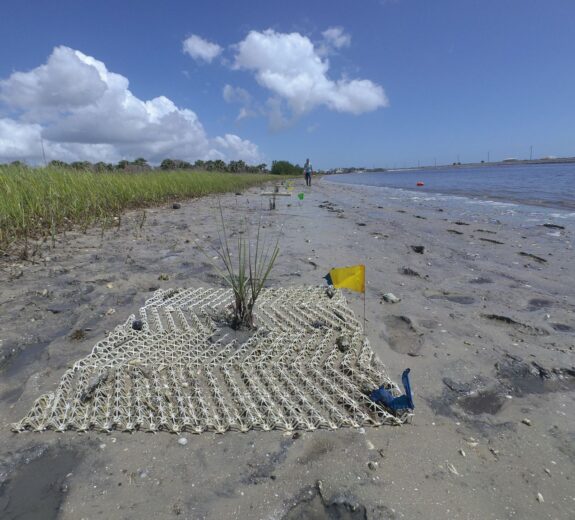
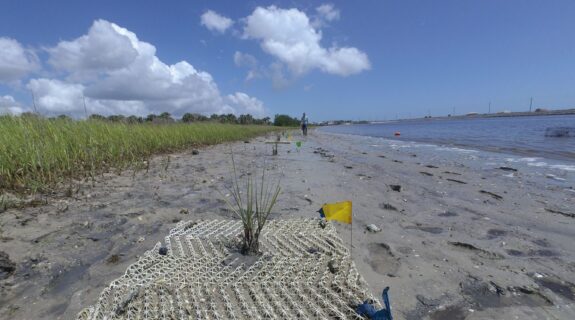
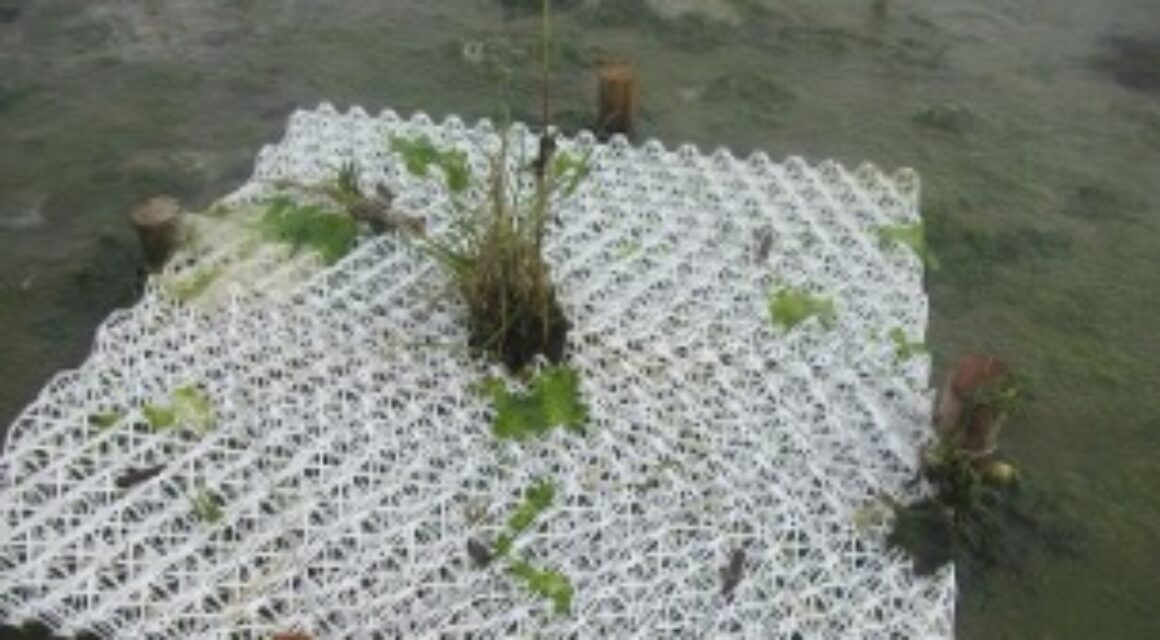
BESE-elements protect young plants by mimicking plant stems that stabilize the sediment and reduce currents. To measure effectiveness of BESE-elments, their installation was compared without BESE-elements.
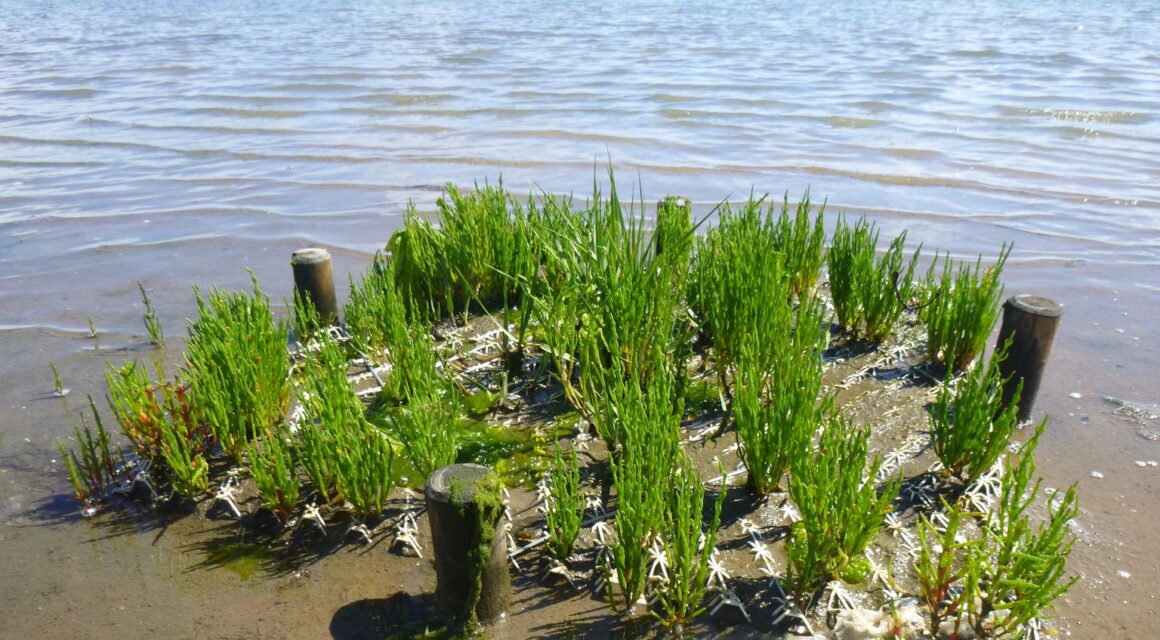
Three layers of BESE-elements were installed. In 1 m2 plots cordgrass (Spartina sp.) was transplanted in the middle of the plot.
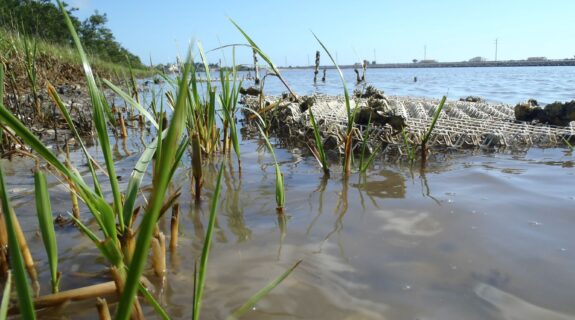
Monitoring showed 100% survival of cordgrass within the BESE-elements while 0% survived without BESE-elements.
Seed trapping and natural recruitment
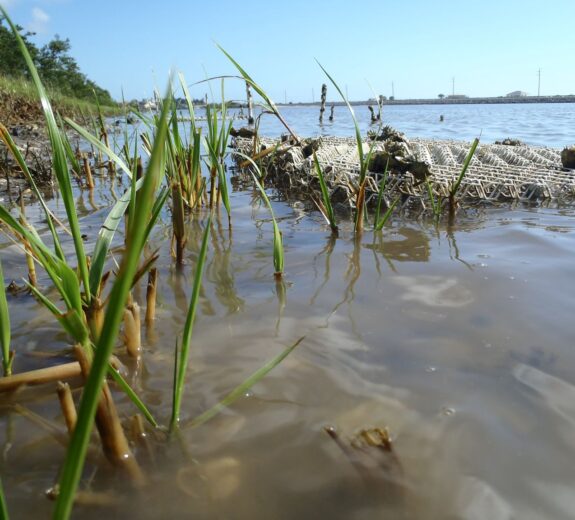
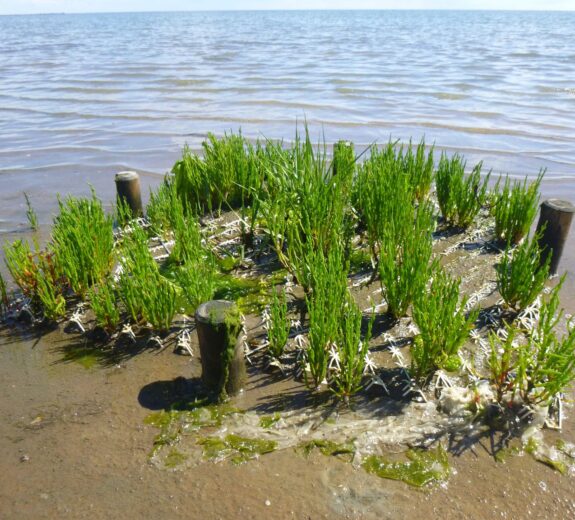
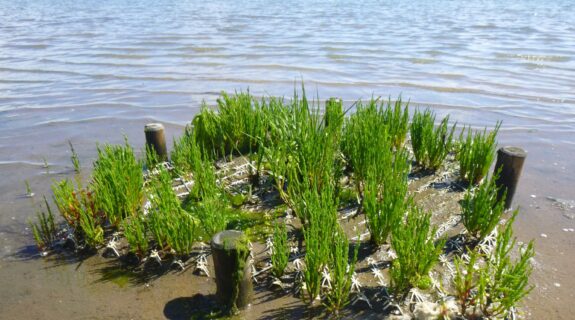
Additional results include improved natural recruitment. BESE-elements fostered recruits of both significantly greater size and density for pioneer species like glasswort Salicornia.
We observed the emergence of 6 new species of indigenous salt marsh plants in BESE-elements after 16 months. These plants were not found in the adjacent pioneer zone.
Protected growth
A single salt marsh plant is easily swept away by waves in a storm. However, an entire saltmarsh can withstand that same storm. Experiments in the Netherlands and the US showed that salt marsh grasses were more likely to survive and grow when young plants were protected by the potato mats. The idea is that by mimicking stems the mats protect the young marsh grass plants as they grow. Once the plant is large and strong enough to survive on its own, the mats eventually disappear by biodegradation.
Why we need to restore salt marshes
Coastal ecosystems are in rapid decline around the world. Saltmarshes are crucial ecosystems that provide numerous benefits. They act as natural buffers against coastal erosion and storm surges. Additionally, saltmarshes serve as vital habitats for a diverse range of plant and animal species, including many commercially important fish and shellfish.
Saltmarshes also play a significant role in carbon sequestration, helping to mitigate climate change by trapping and storing carbon. Furthermore, saltmarshes improve water quality by filtering pollutants and nutrients, stabilising sediments, making them essential for maintaining healthy coastal ecosystems and supporting human well-being.
Results
- 100% survial rate for cordgrass
- 40 x Shoot number increase for cordgrass
- 6 new species by natural recruitment
- Higher recruitment success, growth and density
- Sediment stabilisation
- Water current reduction
- 3 Scientific publications